Upo Wetland
우포늪
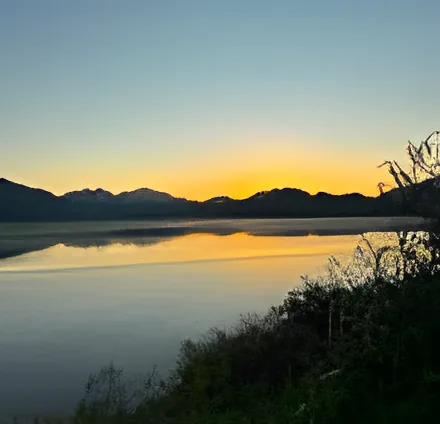
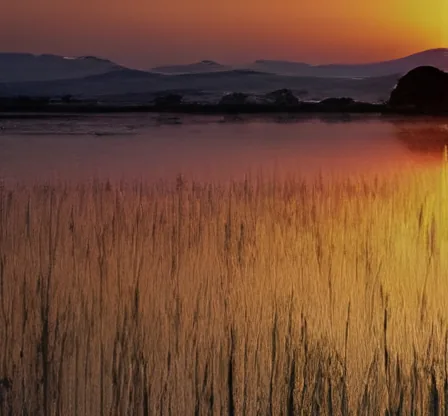
Upo Wetland is a vast wetland covering a total area of 2,505 thousand square metres, spanning four districts—Yueo-myeon, Ibanng-myeon, Daehap-myeon and Daeji-myeon—in Changnyeong County. Upo Wetland is a treasure trove of ecosystems, home to numerous organisms including approximately 800 species of plants, 209 species of birds, 28 species of fish, 180 species of benthic macroinvertebrates and 17 species of mammals. It was designated as an Ecological and Landscape Conservation Area on 26 July 1997, registered as a Ramsar Convention Wetland on 2 March 1998, and designated as a Wetland Protection Area on 9 August 1999. Due to its importance, it was designated as a Natural Protection Area on 13 January 2011, and on 8 February 2012 it was redesignated as a Wetland Improvement Area and Wetland Protection Area. On 25 October 2018, it was certified as the world's first Ramsar Wetland City at the 13th Ramsar Convention Conference of the Parties. The wetland is said to have first begun forming 140 million years ago. During the Cretaceous period of the Mesozoic Era, when dinosaurs roamed the earth, sea levels rose sharply and the ground in the Nakdong River basin subsided, causing water flowing into the Nakdong River in this area to stagnate and creating wetlands and natural lakes in various places, which became a playground for the dinosaurs that then ruled the earth. Dinosaur footprint fossils remain in Sejin-ri, Yueo-myeon, near present-day Upo Wetland. During the rainy season, Upo Wetland can reach depths of 5 metres, but typically maintains depths of 1 to 2 metres. At the wetland bottom, a thick layer of humus has accumulated over tens of millions of years from the repeated cycles of life and death of countless organisms, and it does not sink like tidal flats. Because of this humus layer preserving vast ages, Upo Wetland is called an archive of ecosystems or a living natural history museum. Until the period of Japanese colonial rule, there were reportedly 10 additional wetlands around Upo Wetland, including Gahang Wetland, Pallak Wetland and Hakam Field. However, these disappeared due to reckless development and the encroachment of agricultural land.
Korea Tourism Organization
Where


Source: Korea Post (우체국) 2026 recommended guide, Gyeongnam.
Similar places