Mahasa Temple
마하사
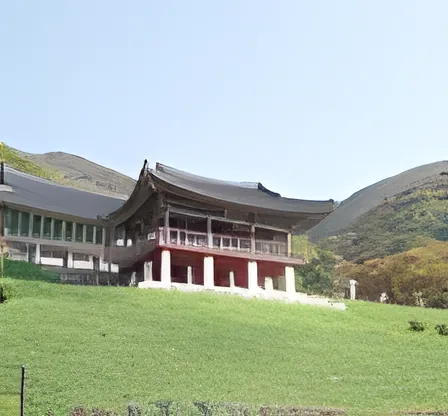
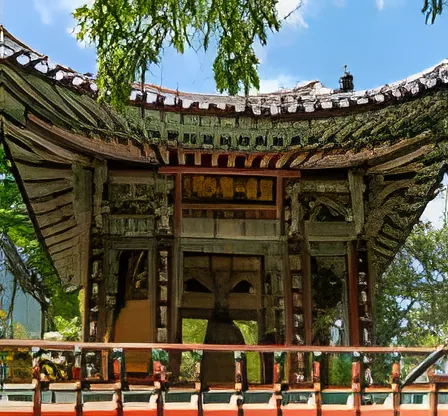
Mahasa Temple, which belongs to the Jogye Order of Korean Buddhism, has its founding and changes detailed in the beam inscription of the Daeungjeon Hall, and records indicate that it was founded by the Buddhist monk Ado. All the temple buildings were burned during the Imjin War, and the temple was restored in stages. In 1970, the Buddhist monk Munseong rebuilt the Daeungjeon Hall, Eungjinjeon Hall, Daebang building, monk's quarters, and dining hall; in 1985, the Buddhist monk Jiyeon erected the bell pavilion and rebuilt Banyaam Hermitage; and in 1998, the Buddhist monk Gyeongmin rebuilt the Daeungjeon Hall and Samseonggak Shrine. Due to the terrain of being a mountain temple and several rounds of reconstruction, Mahasa Temple's layout does not follow traditional temple arrangements, but the narrow temple grounds are well organized, and the Daeungjeon Hall features a five-bay front and three-bay side structure with a hip-and-gable roof. Within the grounds of Mahasa Temple are preserved many cultural properties including the Stone Shakyamuni Buddha Triad at the Daeungjeon Hall, the stone arhat statues at the Eungjinjeon Hall, the wooden seated Shakyamuni Buddha statue at the Eungjinjeon Hall, the Parinirvana of Buddha painting at the temple, a point of pride in Buddhist art, the Sixteen Arhats painting at the Eungjinjeon Hall, the Parinirvana of Buddha painting at the Eungjinjeon Hall, and the Heavenly Kings painting at the temple.
Korea Tourism Organization
Where


Source: Korea Post (우체국) 2026 recommended guide, Busan.
Similar places